Where to watch
This film isn’t available on any of the streaming services we track yet. Click the button below to recommend it to Filmelier+.
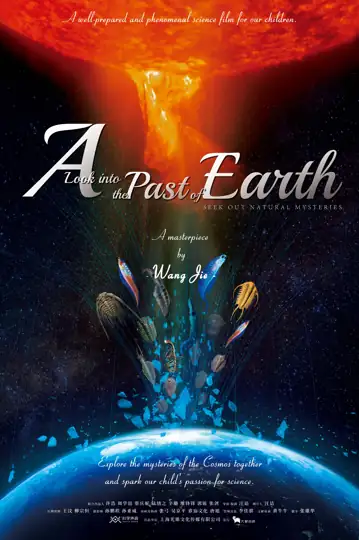
Paleontologist Charles Doolittle Walcott investigates Earth's ancient mysteries in the Canadian Rockies, uncovering origins during a prehistoric explosion.
Hint: In a race across the US heartland, a red car discovers the true meaning of friendship.

Think you can guess today's movie? 🤔

One hint, 6 chances, and a new movie to guess every day
The Cambrian Explosion: In 1909, American paleontologist Charles Doolittle Walcott discovered the Burgess Shale fossil beds in the Canadian Rockies, marking the first time the scientific community realized that life on Earth underwent an explosive phase during the Cambrian period, about 500 million years ago. This event is known as the Cambrian Explosion. In 1984, Chinese paleontologist Hou Xian-guang made a groundbreaking discovery in Yunnan, China, uncovering the Chengjiang fossil site, which contains the most complete record of the Cambrian Explosion in the world. However, the more we learn about Cambrian life, the more mysteries arise. Why did these life forms suddenly appear? How did each phylum evolve? One of the greatest puzzles is how the ancestors of all vertebrates-the first "fish"-evolved. In December 1998, Professor Shu Degan from Northwestern University (now an academician of the Chinese Academy of Sciences) identified the fossil of Haikouichthys from the Cambrian strata in Chengjiang. This fossil is believed to be the earliest known ancestor of vertebrates, earning the title "the first fish" and becoming a sensational discovery worldwide. It also marks a significant contribution by Chinese scientists to global paleontology. For over 100 years, the mystery of the Cambrian Explosion has been a central focus of paleontological research. Yunnan's Chengjiang fossil site is the largest Cambrian fossil treasure trove in the world, and thanks to the relentless efforts of Chinese paleontologists, many of the mysteries left by the Cambrian period have been unraveled. However, countless enigmas still await future scientists to solve. Geomagnetic Reversal: In 1906, French geophysicist Bernard Brunhes first discovered that Earth's magnetic field may have reversed in the past. In 2017, a research team consisting of scientists from mainland China, Taiwan, and Australia collected rare high-resolution samples from the Sanxing Cave in Guizhou, China. Using precise measurement and dating techniques, they studied paleomagnetic information recorded in the cave's stalagmites and found evidence of the fastest geomagnetic reversal ever recorded, which occurred over just 144 years. This discovery stunned the world, revealing a reversal speed 10 times faster than previously known. Scientists have also found that Earth's magnetic field strength is declining at an accelerated rate, with the current rate being 10 times faster than earlier estimates. From 1970 to 2020, the magnetic field weakened by approximately 8%. Since 1840, when records began, the magnetic north pole has been shifting toward the geographic north pole, with its displacement over the past 20 years exceeding the total movement of the previous 100 years. All of these signs suggest that we may be on the verge of another geomagnetic reversal. How do geomagnetic reversals occur, and what impact do they have on life on Earth? This film was shot on location in Heilongjiang, Yunnan, and Guizhou, China, and features footage from the Zero-Magnetic Laboratory at the Institute of Geology, Chinese Academy of Sciences, and the Earth Science Laboratory at the Shanghai Astronomical Observatory. Interviews with leading scientists will provide an in-depth exploration and explanation of this natural mystery.